





News & Stories.
 13 May 2026
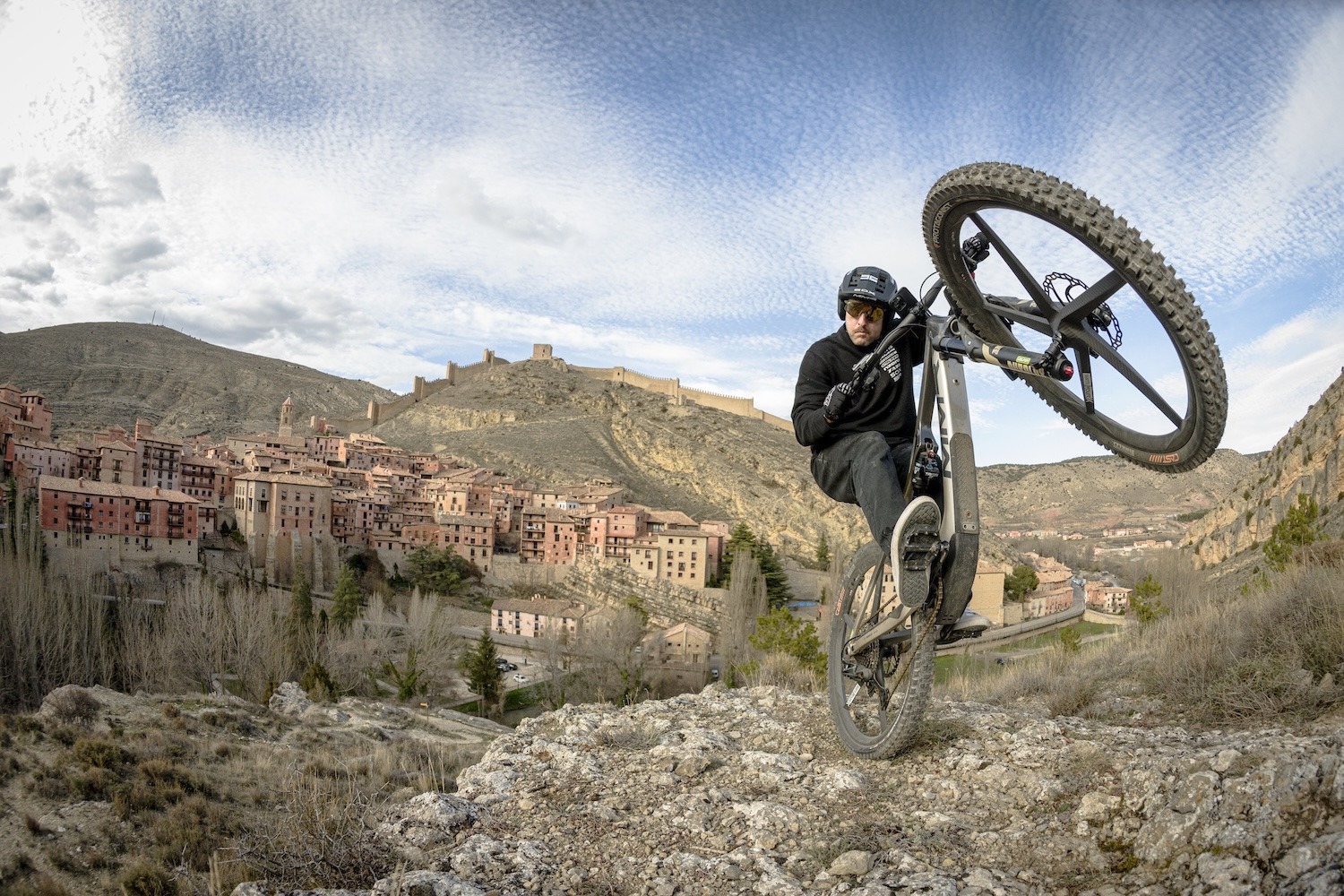
Albarracín: pedaling between history, rock and silence
There are places you visit… and others you pass through. Albarracín belongs to the latter. It’s not just a destination; it’s a territory experienced with the body, with the eyes and, in the case of mountain biking, with every pedal stroke. Located in the heart of the Sierra de Albarracín, in the province of Teruel, this enclave stands out not only for its undeniable beauty, but for the way it condenses history, geology, culture and nature into a space that feels suspended outside of time.
Before becoming one of the most photographed villages in Spain, Albarracín was Al-Banu Razín, a small yet strategic Berber kingdom that, during the 11th century, settled on this rocky promontory surrounded by the Guadalaviar River. Its location was no coincidence: an almost perfect meander protected the urban core, while the walls —of Andalusian origin and later expanded— turned the place into an almost impregnable fortress. For centuries, this enclave functioned as an independent territory, detached from the direct control of surrounding powers, building an identity that can still be felt in every corner of the village.
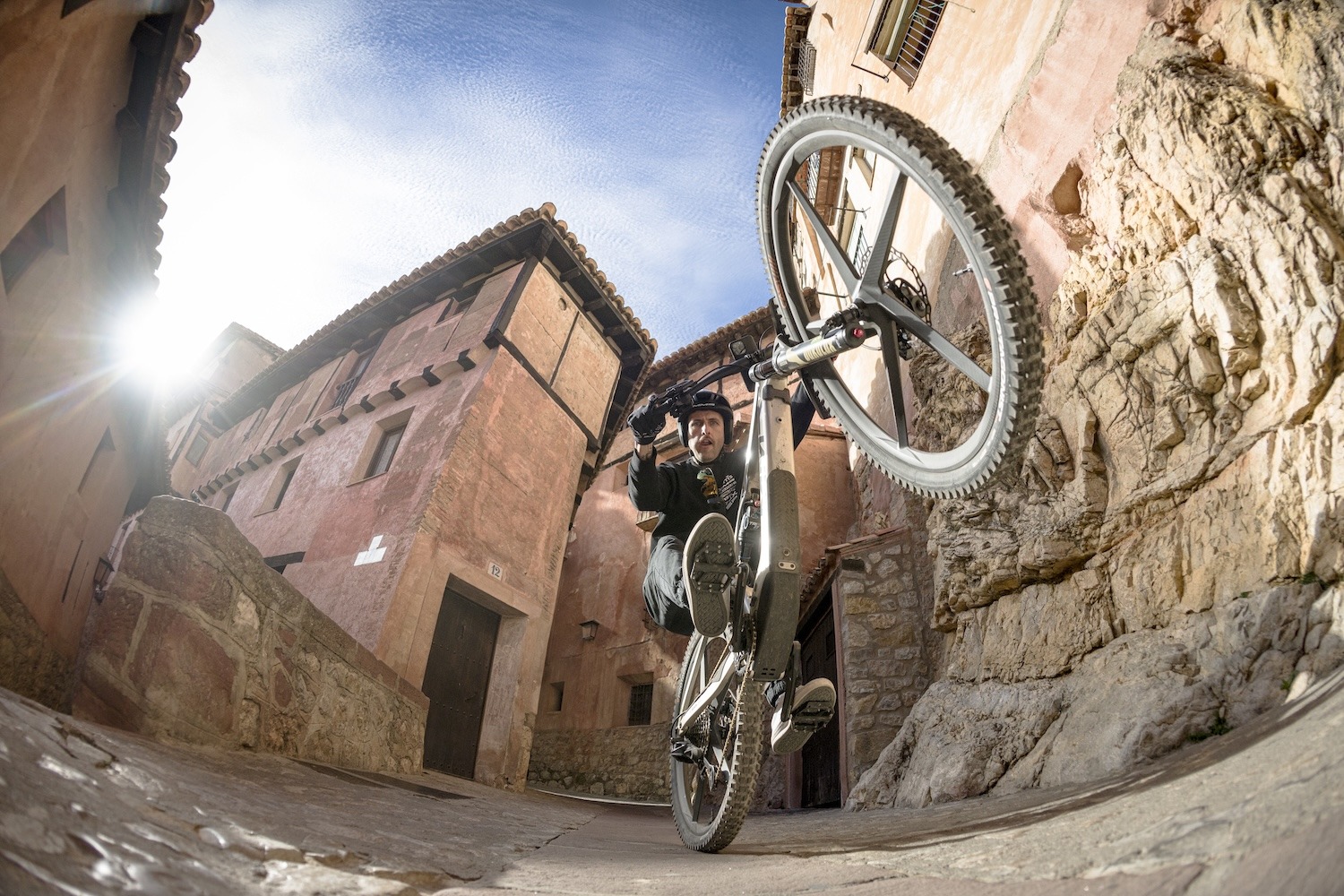
That sense of living history remains intact as you walk its streets. The reddish houses, built with local gypsum and sandstone, seem to defy gravity, leaning against each other in an impossible balance. Narrow alleys, wooden balconies and constructions like the iconic Casa de la Julianeta or the Cathedral of El Salvador turn a simple walk into something beyond tourism. You don’t just walk here: you travel back in time.
However, it only takes a few meters away from the historic center for everything to change completely. The asphalt disappears, the noise fades, and the Sierra de Albarracín takes over. This mountain range, reaching elevations above 1,900 meters, is one of the wildest and least populated territories in the Iberian Peninsula. It is part of what is known as “empty Spain,” where silence is not rare—it is constant.
It is in this context where the bicycle makes sense
Die MTB-Route rund um Albarracín ist nicht nur eine sportliche Strecke, sondern ein schrittweises Eintauchen in den Charakter dieses Gebiets. Schon mit den ersten Pedaltritten setzt das Terrain den Ton: anspruchsvolle Wege, loser Schotter und stetige Anstiege verlangen Rhythmus und Präzision. Dies ist kein Gelände für Improvisation – es fordert Aufmerksamkeit, Technik und Respekt.
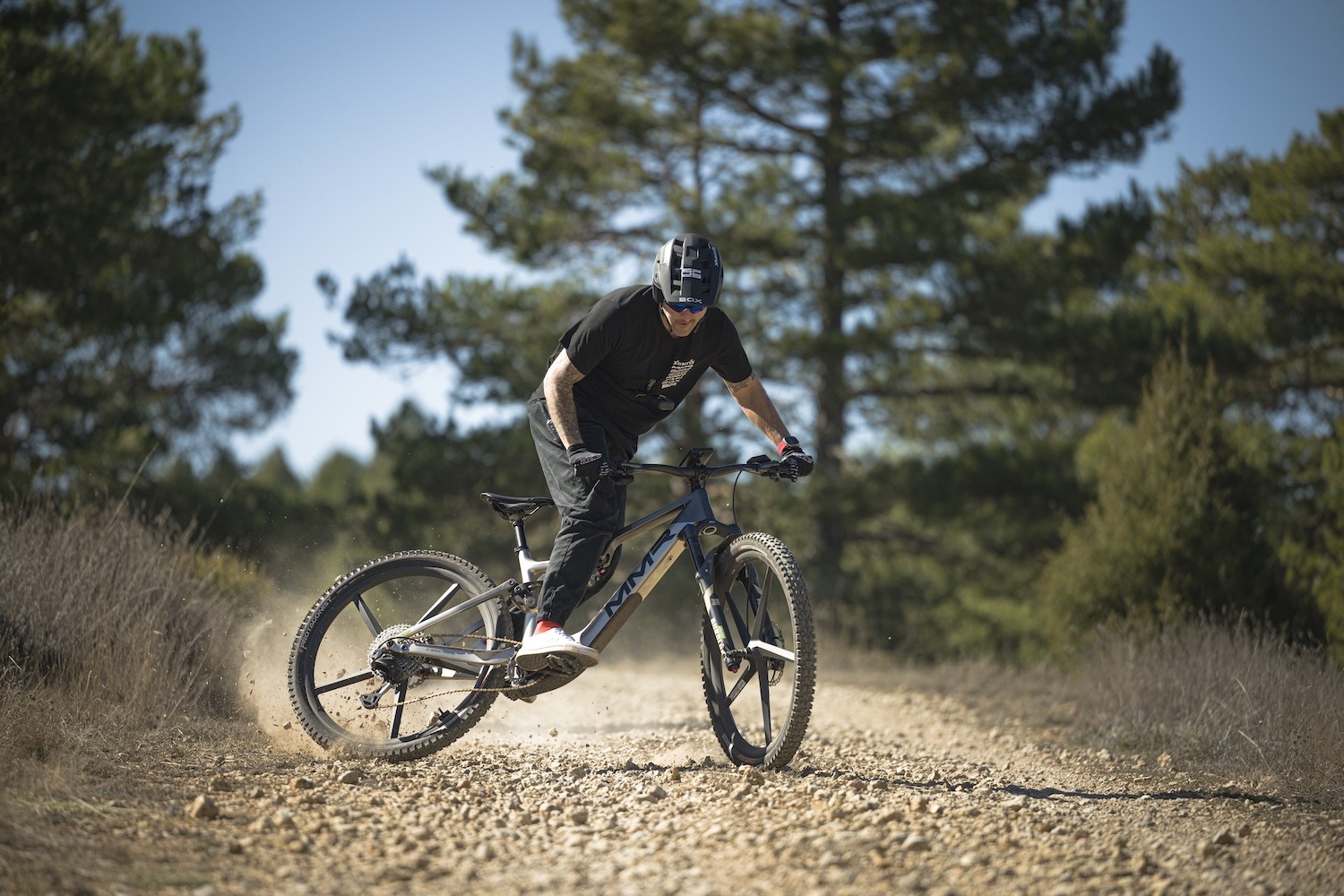
The MTB route that surrounds Albarracín is not just a sporting route, but a progressive immersion into the character of the territory. From the very first pedal strokes, the terrain sets the tone: demanding tracks, loose gravel and constant gradients that force you to find rhythm and precision. This is not terrain for improvisation; it demands reading, technique and respect.
As you gain elevation, the landscape transforms into one of the most unique environments in Spain: the Pinares de Rodeno. Here, the contrast between the intense red of sandstone and the deep green of pine trees creates an almost unreal atmosphere. The ground constantly changes, alternating compact sections with looser areas where traction becomes a challenge. Every corner forces a decision, every meter demands focus.
Riding here means riding through layers of history
Among these pine forests, hidden between rock shelters, lie some of the most important rock art sites in the peninsula. These paintings, belonging to what is known as Levantine Art and dating between 6,000 and 8,000 years old, depict hunting scenes, stylized human figures and animals that were part of the environment of early inhabitants. Declared a UNESCO World Heritage Site as part of the Mediterranean Basin rock art, these expressions turn the route into something more than just a sporting experience.
Long before trails, bikes or digital maps existed, other humans had already crossed these same ravines. They weren’t looking for speed or elevation gain, but for something that remains unchanged: the need to explore, to understand the environment, to leave a mark. That invisible connection between past and present is, perhaps, one of the most powerful aspects of this experience.
Boulder climbing mecca
And it is also in this section where the landscape reveals another of its most surprising identities. This is where we pass through one of the most famous bouldering areas in the world. The sandstone formations, rounded by time, have turned this place into a true sanctuary for climbers. Every year, especially in spring, countless athletes come here to take advantage of these unique natural lines. There is life in every corner: groups preparing attempts, others resting on crash pads, some solving impossible moves. You look to one side and see climbers. To the other, more. And just a few meters away, even more. It’s a true celebration in the middle of the forest. A very special culture, quiet yet intense, living in harmony with the environment and adding an even more unique personality to Albarracín.
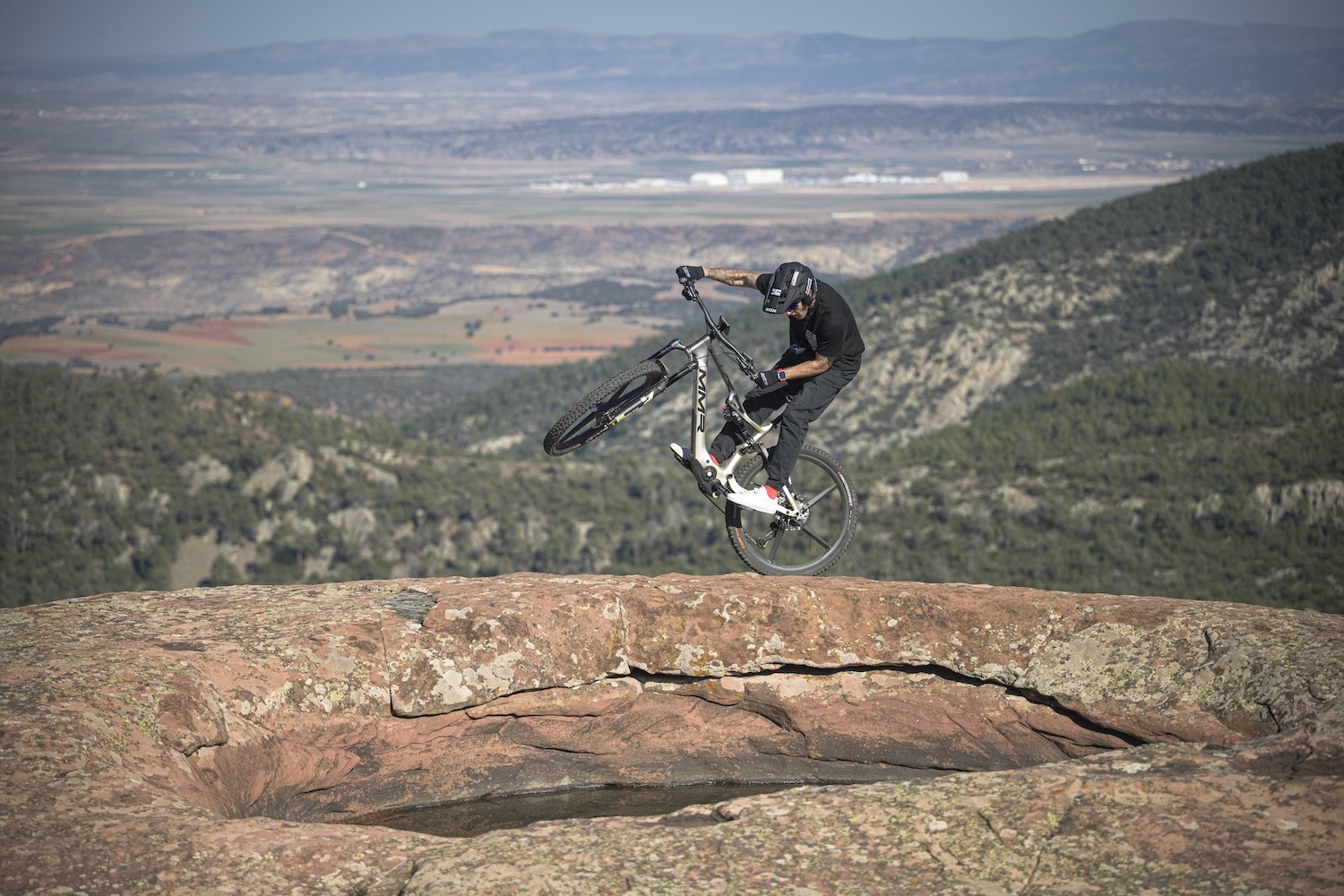
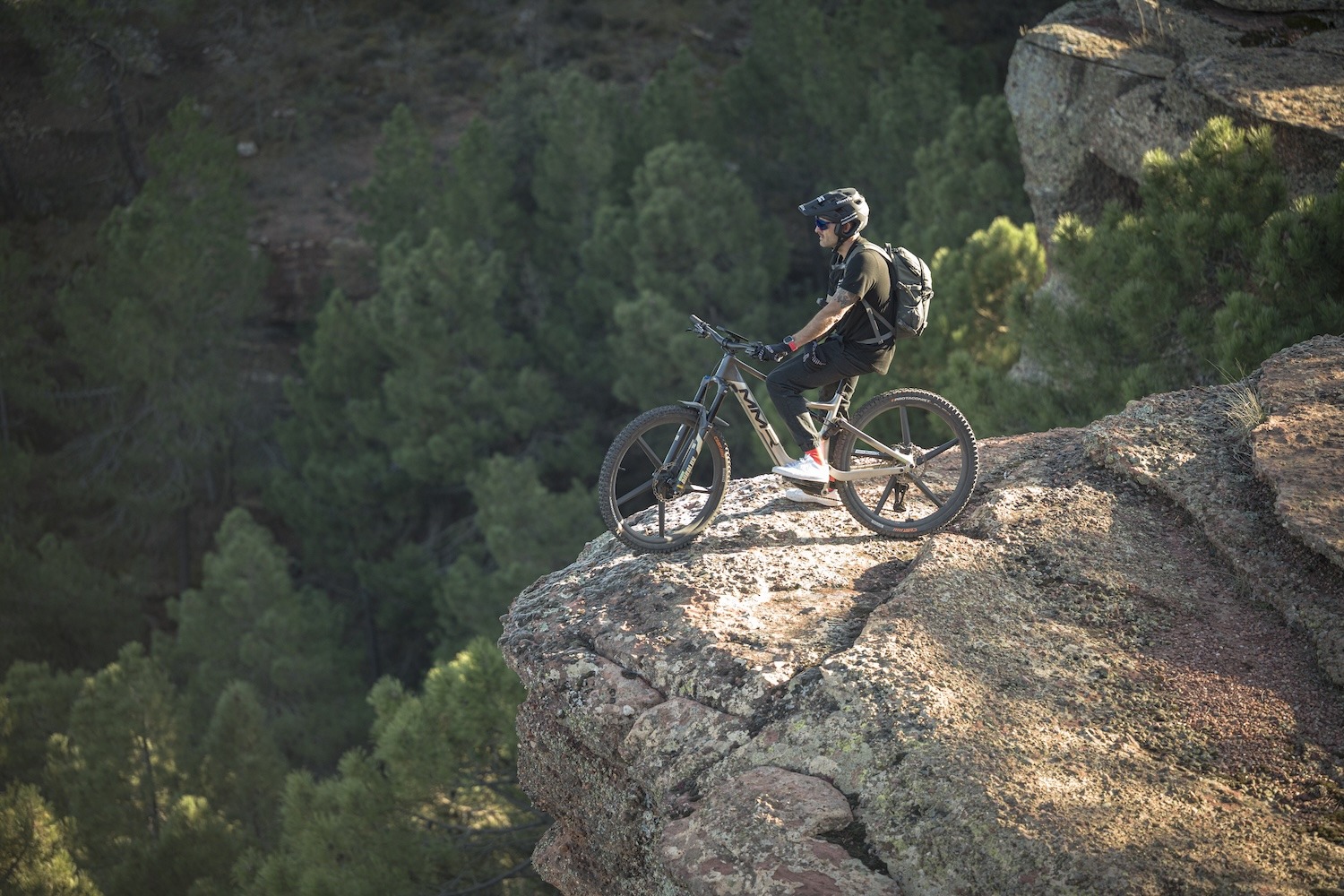
After reaching key points like the Mirador Alto del Puerto or Peñas Royas —true natural balconies over an ocean of pine forest— the route shifts. Gravity takes control and a descent begins that captures the essence of mountain biking in its purest form. Narrow, technical and completely natural trails, where the mix of rock, compact dirt and loose sand demands precise riding. It’s not about going fast—it’s about reading the terrain.
Flow appears… and disappears, alternating smooth sections between pine trees with more broken areas that demand anticipation and technique. It’s a living, ever-changing descent that keeps the rider engaged until the very last meters. As elevation drops, red tones dominate again, and rock formations create natural corridors that intensify the feeling of riding through a truly unique landscape.
Gastronomy to recover
Back in the village, the contrast is inevitable. The walls reappear, the houses once again hang over the void, and human activity replaces the silence of the mountains. But something has changed. Because Albarracín doesn’t just offer a route—it offers a way of understanding the territory.
And if there is something that completes the experience in Albarracín beyond terrain and history, it is its gastronomy. Because here, cuisine is not a tourist addition—it is a direct consequence of the landscape. Of altitude, climate and life in the mountains. Eating in Albarracín is understanding how people have lived here for centuries.
The local culinary tradition is deeply linked to pastoral life and the need for hearty, energetic and no-nonsense dishes. Recipes designed to endure long days, harsh winters and a demanding environment. Migas a la pastora are probably the most representative example: simple in appearance but full of identity, made with bread, garlic, olive oil and accompanied by cured meats or grapes, depending on the season. A humble dish that perfectly summarizes mountain cuisine.
Lamb, another pillar of local gastronomy, appears in many forms, although roasted remains the true star. Tender meat, deep flavor and a preparation that respects the product without unnecessary additions. Alongside this stands one of the great symbols of the province: Jamón de Teruel, cured under the unique climatic conditions of the mountains, where cold and altitude play a key role in its texture and aroma.
Artisan cheeses, traditional stews and seasonal products complete an offering that doesn’t aim to impress with modern techniques, but to win through authenticity. Here, people eat the way they live: without rush, without complications and with respect for the product.
After a demanding day of mountain biking, where the body has been pushed to its limits and the mind fully connected to the environment, sitting down at the table in Albarracín is not just about refueling. It’s about closing the circle. Returning to what matters. Understanding that the experience doesn’t end when you stop pedaling.
Albarracín is, ultimately, one of those places where mountain biking finds its most authentic expression. No artificial features, no bike parks or trails built for show. Just real terrain, accumulated history and untamed nature.
A place where every pedal stroke has context. Where every trail has memory. And where the journey is not measured only in kilometers, but in everything that happens between them.
Because there are routes you ride… and places that, inevitably, end up shaping you.
Text & riding: David Cachon
Photography: Ismael Ibañez
Share article